
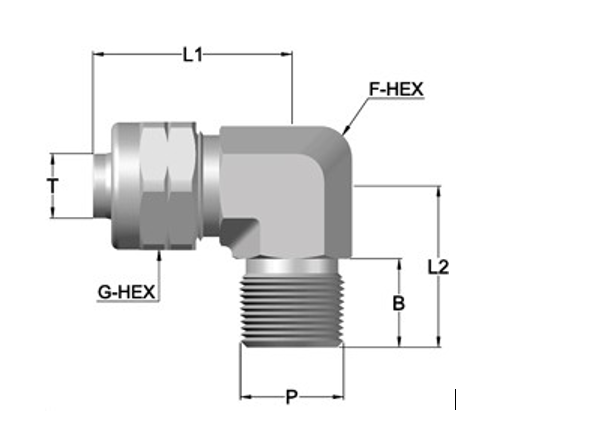
Complex pneumatic assemblies often hide a quiet cost inside their many threaded joints and manual connections. Every extra fitting adds a potential leak point, more assembly labour, and slower servicing. Plants chasing faster changeovers are discovering that stainless steel push-on-fittings remove much of that friction while holding pressure reliably across demanding lines.
The shift matters because downtime during setup and maintenance eats directly into output and margin. Stainless steel push-on-fittings let an operator seat a tube by hand and trust the grip without tools or thread sealant. That simple change turns a fiddly, error-prone task into a repeatable one, which is why more automated systems now specify them by default.
Overcomplicated Pneumatic Connections Drain Uptime and Labour
Every Threaded Joint Is a Potential Leak Path: Each threaded connection in a pneumatic circuit is a place where air can escape and pressure can drift. Thread sealant ages, joints loosen under vibration, and small leaks pass unnoticed until compressor load climbs. On a busy line with dozens of connections, those minor losses compound into wasted energy and unstable actuator response.
Complicated Assemblies Undermine Maintenance Planning: Complicated fitting layouts make routine servicing slower and harder to schedule with confidence. When technicians must break multiple threaded joints to reach one component, planned stops stretch and unplanned faults multiply. Programmes built around predictive maintenance depend on quick, repeatable access, and dense threaded assemblies work against that goal at every intervention.
Delaying the Switch Lets Small Problems Compound: Postponing a move away from crowded threaded connections rarely stays cost-free for long. Leaks widen, energy bills creep upward, and the window for a tidy retrofit narrows as ageing joints seize. In everyday plant practice, maintenance teams routinely inherit systems where years of patched fittings turned a simple upgrade into a major rebuild.
Faster Installation Frees Skilled Hands for Higher-Value Work
Tool-Free Seating Cuts Assembly Time Sharply: Push-on connection removes the slowest steps from pneumatic assembly. An operator pushes the tube into the fitting, the internal grip holds, and the joint is ready without wrenches, torque checks, or sealant curing. Where a plant standardises on stainless steel push-on-fittings, build times fall and skilled technicians spend less time on repetitive make-up work.
Smooth Internal Bores Keep Air Delivery Consistent: Consistent air delivery depends on how cleanly the passage carries flow through each connection. Push-on designs with smooth internal bores limit turbulence and pressure loss across the joint. Engineers who study fluid dynamics know that abrupt internal steps disturb flow, so a cleaner bore helps actuators and tools receive steady pressure at the working point.
Push-On Fittings versus Threaded and Compression Alternatives
Each Connection Type Suits a Different Duty: Different fitting types earn their place under different conditions. Compression fittings still suit very high pressures and permanent runs where a metal-to-metal ferrule seal is preferred. Threaded joints remain common on legacy equipment. Push-on designs win where frequent access, rapid assembly, and repeated reconfiguration matter more than a fixed, seldom-touched connection.
Repeatable Access Makes Push-On the Practical Default: For lines that change often, push-on connection is usually the more practical response. Quick-release versions let a technician disconnect and reconnect a tube in seconds during changeovers or cleaning. Stainless construction keeps that convenience durable in damp, washdown, or lightly corrosive settings, so the speed advantage does not come at the expense of service life.
Stainless Construction Protects Performance over the Long Term
Corrosion Resistance Preserves Seal Integrity: Stainless steel holds up where moisture, cleaning chemicals, and coastal air would corrode lesser materials. Grades such as 316 and 316L resist pitting and keep sealing surfaces intact, so the grip that made installation easy still holds years later. That corrosion resistance protects both leak integrity and the pressure rating the line was designed around.
Lower Lifetime Cost Follows Fewer Interventions: Total cost falls when connections stay reliable and quick to service for years. Fewer leaks mean lower compressed-air energy use, and faster access means shorter stoppages whenever a change is needed. Plants that adopt stainless steel push-on-fittings often find the modest per-fitting outlay repaid through reduced downtime, lower labour hours, and steadier line output.
See also: The Rise of Digital Health Platforms
Key Considerations before Specifying Push-On Connections
Selecting the right connection still calls for judgement about pressure, media, temperature, and duty cycle. Stainless steel push-on-fittings cover a broad band of pneumatic work, yet a few checks keep specification sound. The points below help engineers weigh where push-on connection adds the most value and where another method may serve better.
- Confirm the working pressure and temperature against the fitting’s rated range, quoted in both bar and psi.
- Match tube material and outside diameter precisely, since push-on grip depends on correct dimensional fit.
- Choose stainless grades such as 316 for washdown, marine, or chemically active environments.
- Reserve compression or welded joints for permanent, very high-pressure runs that rarely need access.
- Favour quick-release versions on lines that face frequent changeovers, cleaning, or reconfiguration.
Simpler Connections for Steadier Production
Simpler pneumatic connections deliver faster builds, cleaner airflow, and fewer leaks across demanding lines. Every month spent on crowded, ageing joints quietly adds energy loss, longer stoppages, and avoidable labour that a planned upgrade would remove. Speak with a fittings specialist to assess your current system and map a practical path to simpler, more reliable connections.
